Every Condo Has a Two-Sale Problem
Every Condo Has a Two-Sale Problem
In today’s market, buyers are not just underwriting the unit. They are underwriting the building behind it—its finances, its governance, and whether the story on paper holds up under pressure.
By Moses Oliva, NJ Real Estate Broker
If there is a single, defining vibe shift in the 2026 New Jersey real estate market, it is this: a condo listing is no longer one sale. It is two.
You are selling the unit—the cathedral ceilings, the curated aesthetic, the fantasy, the visceral feeling a buyer gets when they cross the threshold and start projecting their life onto the walls. And, simultaneously, you are selling the building behind it. You are selling its finances, its governance, its discipline, and whether the association operates like a solvent, forward-thinking asset or a beautifully staged liability. Both are being evaluated at once, often through entirely different lenses, and increasingly with equal, unforgiving weight.
For years, the first sale could easily camouflage the second. A killer unit could carry a shaky building. Immaculate staging, the right list price, and the sheer emotional momentum of a bidding war could push a deal across the finish line, even if the HOA’s balance sheet was crying out for a forensic audit.
That is a much tougher sell today. The 2026 buyer is sharper, more anxious, and highly analytical. They are asking harder questions earlier, reading deeper into the disclosures, and underwriting risk with a level of seriousness that leaves many sellers—and frankly, many agents—flat-footed.
When Surfside happened, it didn't just alter building codes; it rewired the psychology of the American condo buyer. Lenders pivoted. Insurers panicked. Buyers woke up. While the legal and regulatory fallout varies by zip code, the market’s verdict has been remarkably uniform: more scrutiny, more paperwork, and an obsession with reserve funds, deferred repairs, and long-term planning. The building is no longer the background music. It is the main act.
### The Phantom Buyer and the New Reality
Before a single coat of paint goes on the walls, before the marketing copy is drafted, there is a fundamental question every seller must ask: Who is the actual buyer for this asset today? Not who would have bought it during the 2021 ZIRP-era frenzy. Not who the seller wishes would buy it. Not who the outdated comps flatter. Who is standing in the market right now, checkbook in hand?
The moment you identify the true buyer, the entire calculus changes. You begin to understand what keeps them up at night, what they will pay a premium for, and what they absolutely will not ignore.
In a recent transaction, the working assumption was that the buyer would fit a familiar, early-2020s archetype: dual incomes, blended purchasing power, and a willingness to stretch their debt-to-income ratio for the right aesthetic. That buyer was real once. They are largely ghosts now.
The actual buyer in today's market is often a single decision-maker—far more conservative about leverage, hyper-focused on long-term value, and completely allergic to overpaying just because a lender says they can. That distinction changes the entire equation. It shifts pricing strategy, positioning, the tolerance for monthly HOA costs, and the way the property is evaluated against its peers. What registered as a minor flaw three years ago is now a fatal dealbreaker.
### The Chocolate Factory and the Lie of Raw Data
This is also where market data starts lying by omission. Algorithms love raw numbers, but data stripped of context is just real estate fiction.
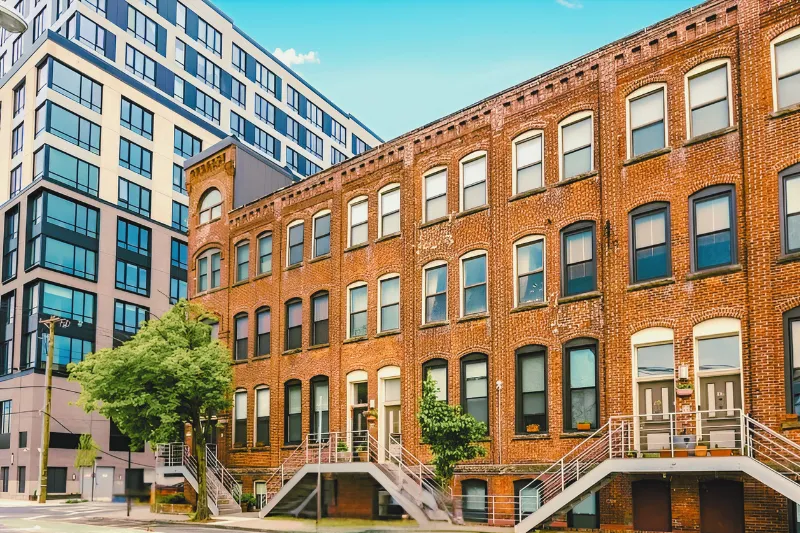
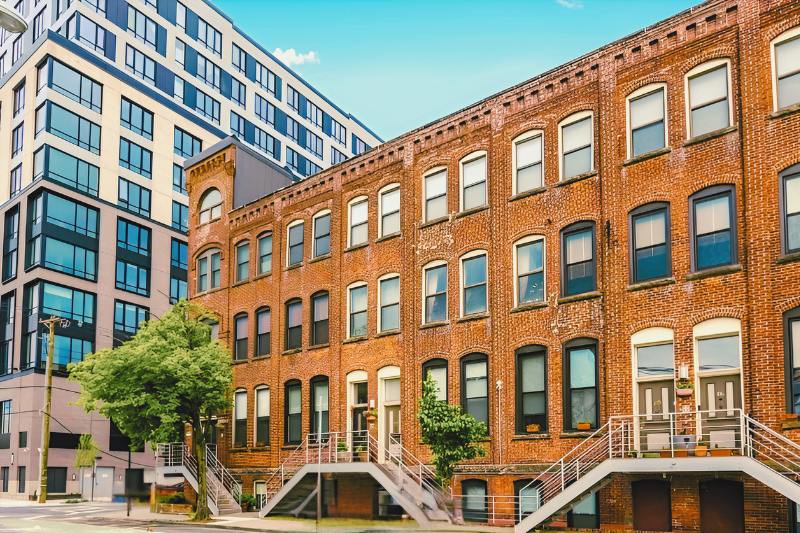
Take a recent transaction in a historic, adaptive-reuse condominium building in Newark’s Ironbound district—the Chocolate Factory. A comparable unit had recently sold significantly below the asking price. On paper, it looked like a clean, undeniable signal of a market correction. Sellers panicked. Buyers salivated. Agents repeated it as gospel.
But here is the context the algorithm didn't capture: the transaction was a sweetheart deal between a university dean and a student in their program. It was a pre-existing relationship. So now, the entire local market has the number, but almost no one has the story.
That is how bad pricing logic spreads like a virus. Data matters, of course. But data without narrative context ages badly, prices poorly, and steers the entire conversation into a ditch. Real value isn't found on a spreadsheet; it’s discovered in exposure. It’s found when multiple informed buyers evaluate the same opportunity, under similar conditions, and the market reveals what it actually believes in real time.
### The Second Sale: Governing the Organism
Then comes the second sale: the building itself. A condominium is not just an apartment with shared walls. It is a shared financial organism. Every buyer is buying into a budget, a reserve posture, an insurance profile, a maintenance philosophy, and a culture of decision-making that began long before they signed the deed.
Let’s be brutally honest: no one joins a condo board because they are burning with a desire to decode aged receivables. Newly elected trustees don't usually arrive knowing how to read a balance sheet. They volunteer because they care, because no one else stepped up, or because they got tired of watching the same hallway leak go unfixed for three years. The truly great buildings figure out how to transmute that amateur goodwill into professional competence.
During my time on a board, we realized we couldn't rely on a single hero; we had to build a bench. We prioritized succession and shared accountability. Soon, everyone was speaking the same language—actuals, run rates, deferred maintenance—because the goal wasn't just to report numbers. The goal was to think predictively.
The irony, of course, is that by the time predictive governance becomes visible to the rest of the building, it usually looks like an inconvenience. Neighbors notice the scaffolding. They notice the noise. They notice the disruption. Rarely do they notice the averted crisis. No good deed goes unpunished in property management.
Our building was fortunate to have a 30-year tax abatement structure where the association effectively paid taxes on the land rather than the improvements. For years, unit owners were paying roughly $500 a quarter. Those were the golden days. But when that era inevitably came to a crashing halt, the valuation disparity across 25 units became impossible to ignore. Some owners were suddenly staring at $3,000 annual tax bills, while others were nearing $13,000—for a condo in the Ironbound.
So, long before I was in real estate, we appealed as a unified front. We showed the equalization issues and valuation disparities against similar neighboring units, and we successfully brought the taxes down across the board. But here is the takeaway: if a board hasn't grown together in its financial fluency, that is a nearly impossible conversation to initiate, let alone win. Trust does not magically appear on the day the crisis arrives. It is built in the quiet years beforehand.
### The New Math: Reserves, Reports, and Reality
For decades, many associations preserved the illusion of affordability by keeping fees artificially low and kicking the capital-improvement can down the road. On paper, it felt efficient. In practice, it was a ticking time bomb.
The 2026 market is unforgiving of that strategy. Reserve studies matter. Engineering reports matter. Master insurance policies—which are seeing skyrocketing premiums and tighter underwriting—are no longer abstract line items; they directly dictate monthly costs and buyer confidence. And confidence is wildly expensive to rebuild once it’s lost.
Buyers have more access to forensic information than ever before. Public records, board minutes, and disclosures are a click away. You can no longer hide weak fundamentals behind a nice kitchen island and brushed brass hardware.
There is still capital in the system. Deals are closing. But this is no longer a broad, forgiving market; it is a surgical, selective one. If you want to move a property today, preparation matters infinitely more than performance. You have to make the whole asset make sense. Anticipate the questions before they are asked, and price for the buyer who actually exists.
Because every condo has a two-sale problem. And the only deals that close are the ones where both stories are true.
### A Practical Rubric for the 2026 Condo Market
If every condo sale is really two sales—the unit and the building—both sides of the table need to adjust their playbooks.
Negotiating Strategies for BUYERS
* Underwrite the building, not just the kitchen. Ask for audits, engineering studies, reserve data, insurance materials, and board minutes. Compare those documents to the glossy marketing narrative. If the story on Zillow is noticeably cleaner than the story in the board notes, pay attention.
* Verify the governance reality. Make sure meetings are actually held openly for deed holders and that minutes are systematically kept. Transparency should be an operating principle, not a theoretical concept.
* Hunt for pet projects. Watch for money bleeding into favored ideas without real scrutiny. Weak financial controls and a culture of "someone else must have checked it" always get expensive later.
* Interrogate the stipends. These are fiduciary roles, not side hustles. If board compensation, reimbursements, or perks look casual or undocumented, ask yourself what else is escaping scrutiny.
* Don't confuse "nice people" with diligence. A building full of friendly neighbors does not negate the need for financial discipline. Treat the communal agreement like the business arrangement it is.
Preparation Tips for SELLERS
* Prepackage the financial narrative. Have the audits, engineering reports, reserve health, and meeting minutes organized before a buyer ever steps foot inside. If the buyer discovers the building’s condition before you explain it, you have already lost the negotiation.
* Assume you will be cross-checked. Smart buyers aren't just reading your listing copy; they are cross-referencing your disclosures against municipal public notes and HOA documents. Make sure your asset holds together under a microscope.
* Clean house before you list. If the board has spotty minutes, questionable stipends, or weak documentation, address it before you go to market. Sloppy oversight is a red flag that depresses valuations.
* Own the disclosures. Take the time to understand the association's paperwork before transferring the title. Feigning ignorance puts you in a weak position; if you can't explain the paper, the buyer will assume there are deeper issues you haven't uncovered.
* Treat the HOA like a corporation. Keep honest people honest. A seller who is unprepared to have a fluent, detailed conversation about the building's financial health reveals carelessness, weak process, or a dangerous over-reliance on institutional trust.
This isn't just about lifestyle anymore. It is about governance, leverage, and risk. After all, this is business—and the side that is unprepared rarely controls the outcome.
